How to Prevent Wasps From Nesting on Your Property: 10 Proven Prevention Tips for Michigan Homeowners
Learn how to prevent wasps, yellowjackets, paper wasps, and bald-faced hornets from nesting around your Michigan home or business, plus what to do when you discover an active nest.
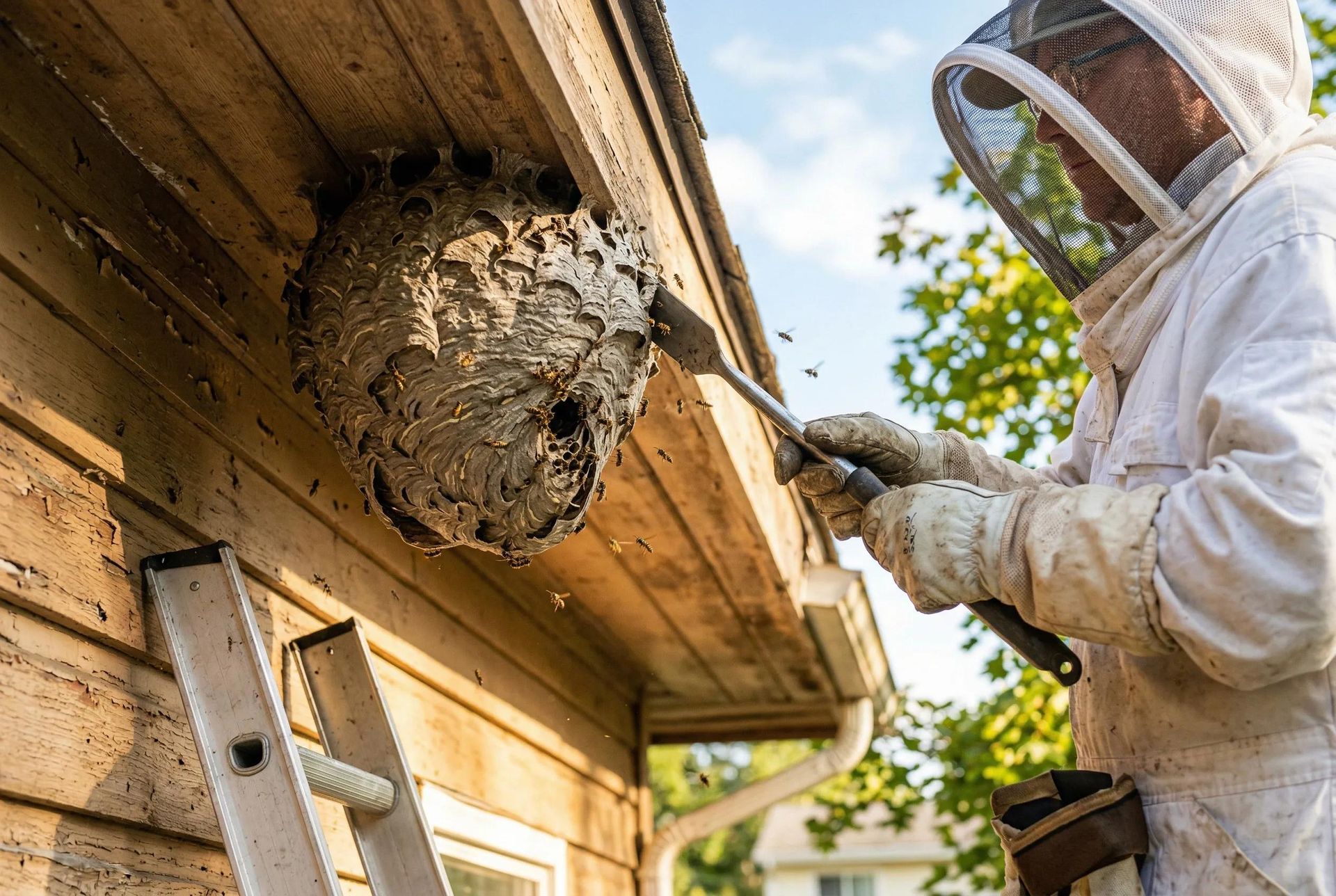
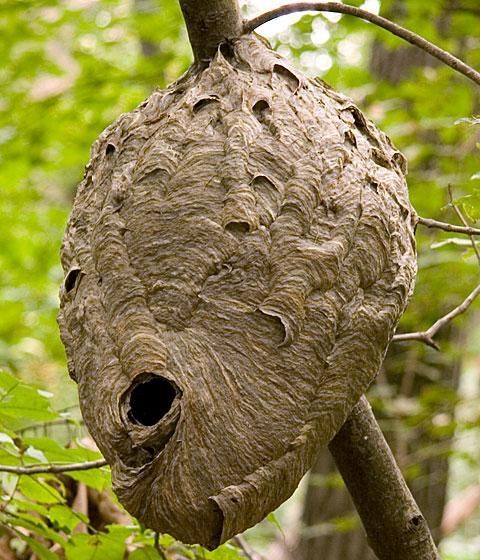
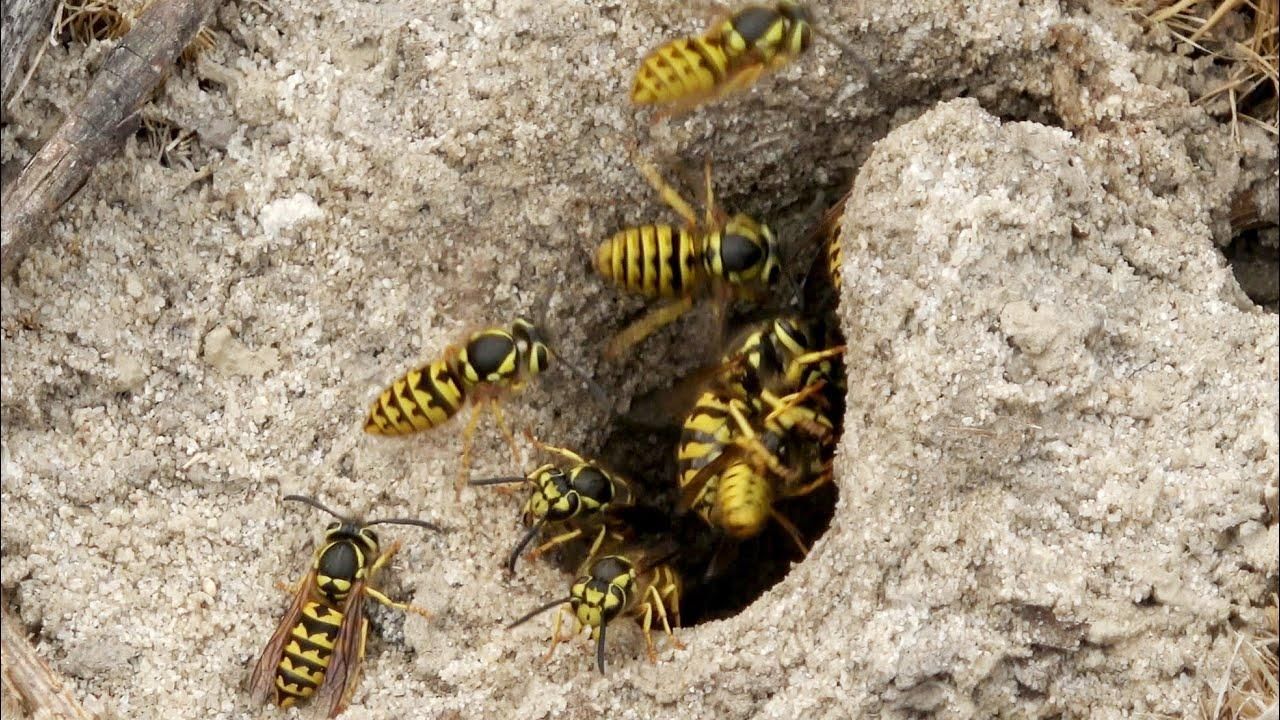
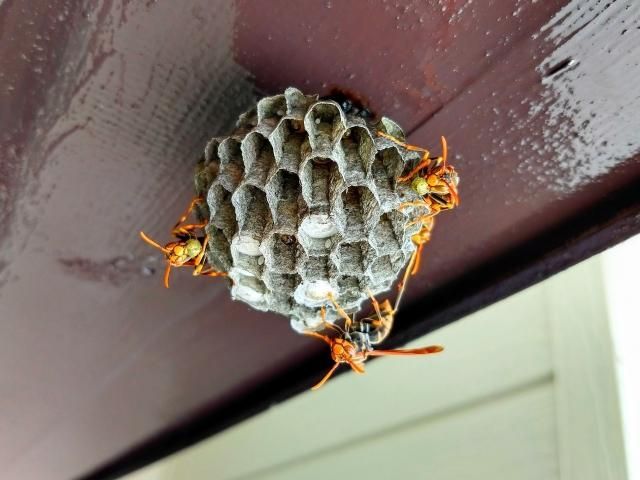
Wasps are a normal part of Michigan's summer landscape, but that doesn't mean you have to share your porch, deck, garage, or yard with an active nest.
As temperatures rise, queens begin establishing colonies in protected locations around homes and businesses. By late summer, those small colonies can contain hundreds or even thousands of wasps, depending on the species.
The good news is that there are several things property owners can do to make their property less attractive to nesting wasps. Even better, identifying the type of wasp you're dealing with can help determine the safest and most effective way to handle the problem.
What to Do If You Have Wasps on Your Property
If you are already seeing wasps around your property, the first step is figuring out what type of wasp you're dealing with and where they're nesting.
Not every wasp requires the same treatment.
Some wasps are relatively solitary and pose little threat to people. Others, particularly social wasps protecting a colony, can become highly defensive when their nest is disturbed.
Yellow Jackets
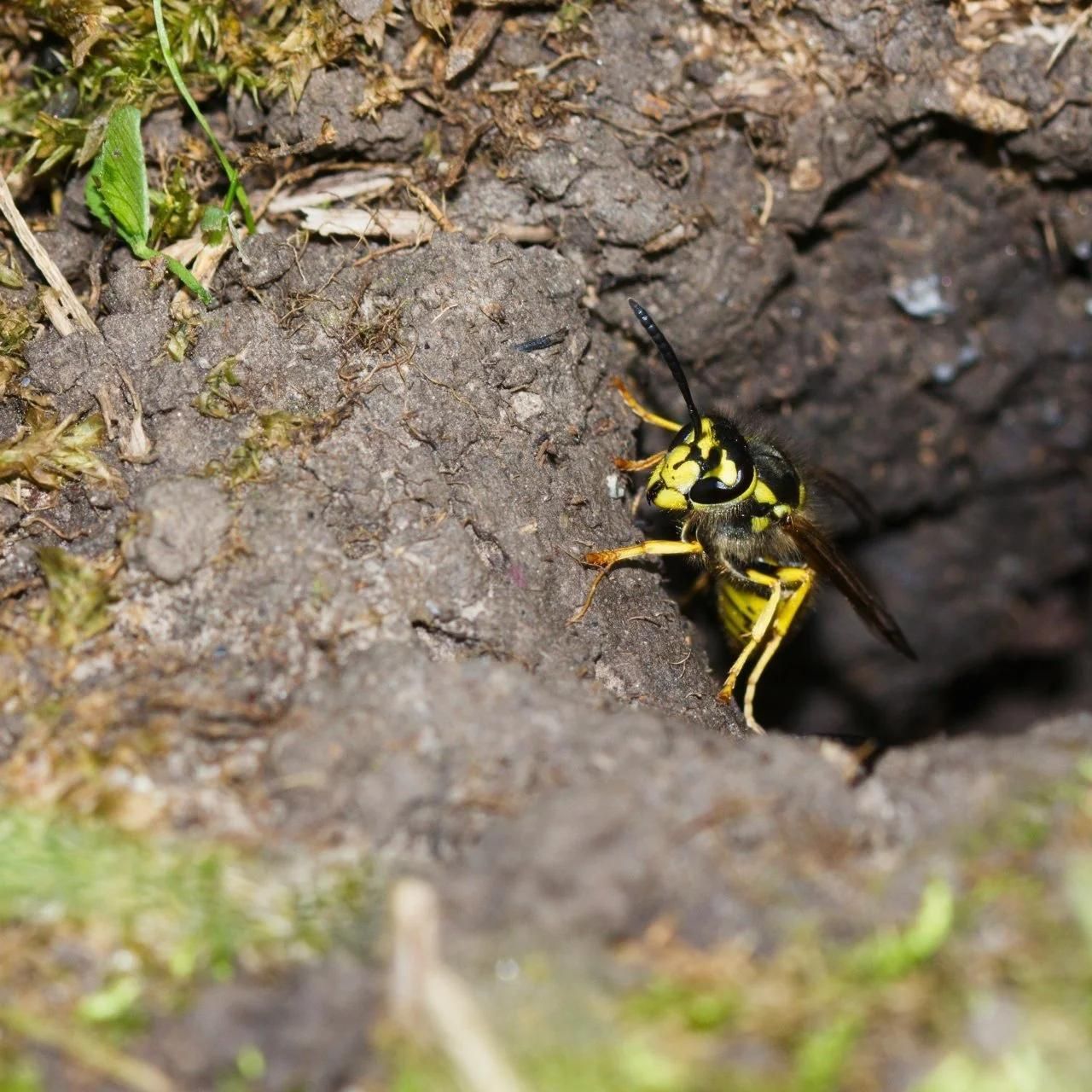
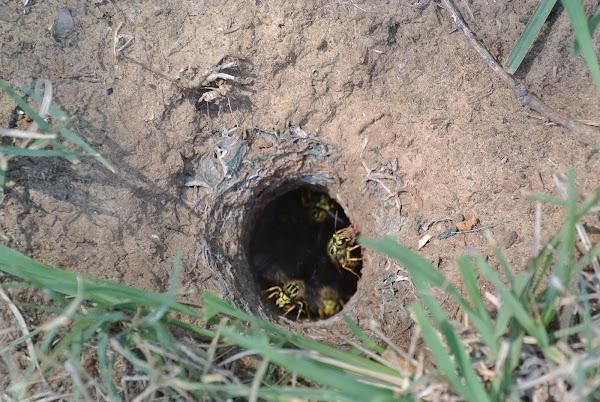
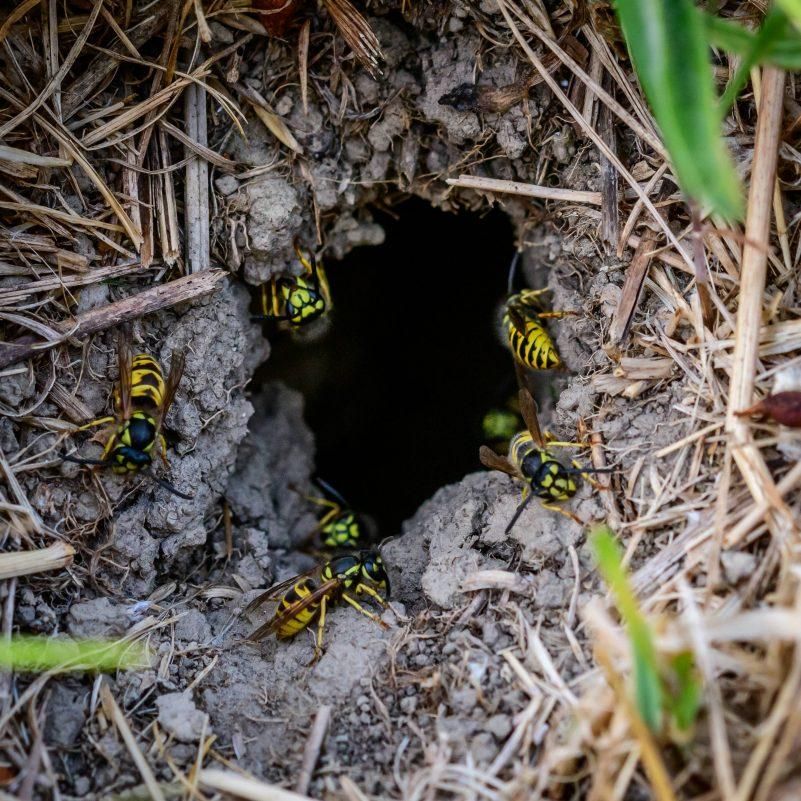
Yellowjackets are among the most common and troublesome stinging insects found around Michigan homes.
Michigan commonly has several yellowjacket species, including German yellowjackets, common yellowjackets, and eastern yellowjackets. They are generally black and yellow, have relatively smooth bodies, and can sting repeatedly.
Yellowjackets may build nests:
- Underground
- Inside wall voids
- In attics
- In crawl spaces
- Under decks
- Inside sheds
- Around landscape timbers
- In other protected cavities
Some yellowjacket colonies can become extremely large. As summer progresses, yellowjackets can also become increasingly noticeable around patios, garbage cans, outdoor meals, and other areas where food and sugary drinks are present.
If you see yellowjackets repeatedly entering and exiting a specific hole or crack, don't assume there is only one or two insects inside. There may be an entire colony hidden nearby.
Paper Wasps
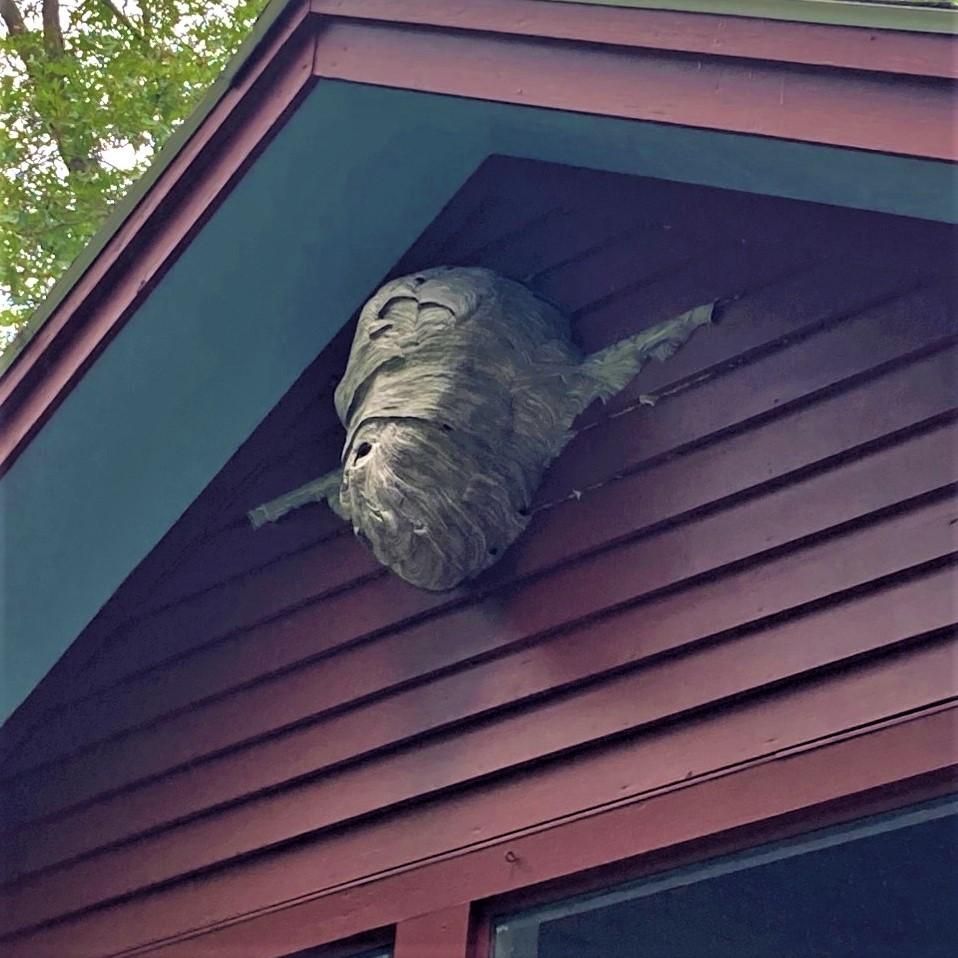
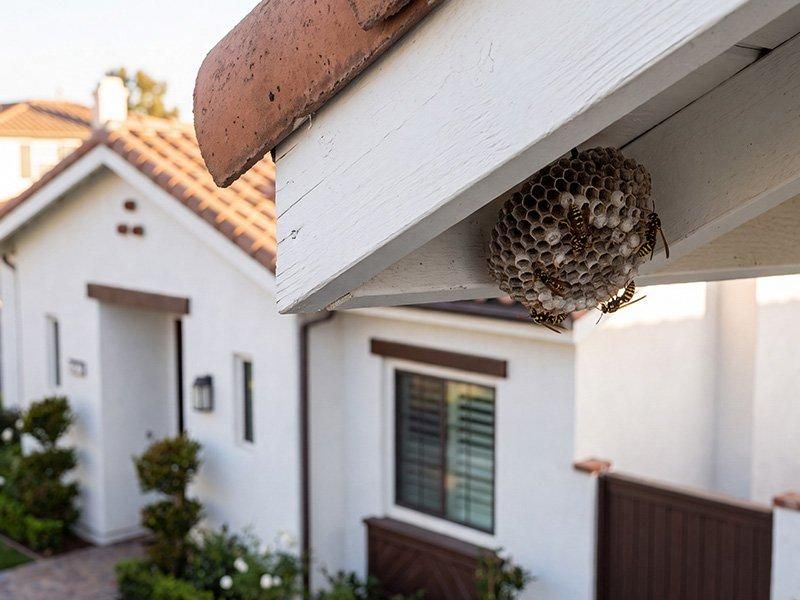
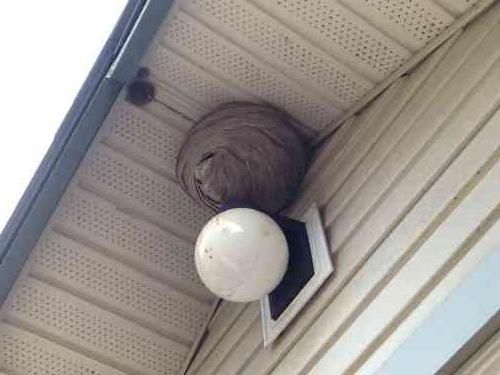
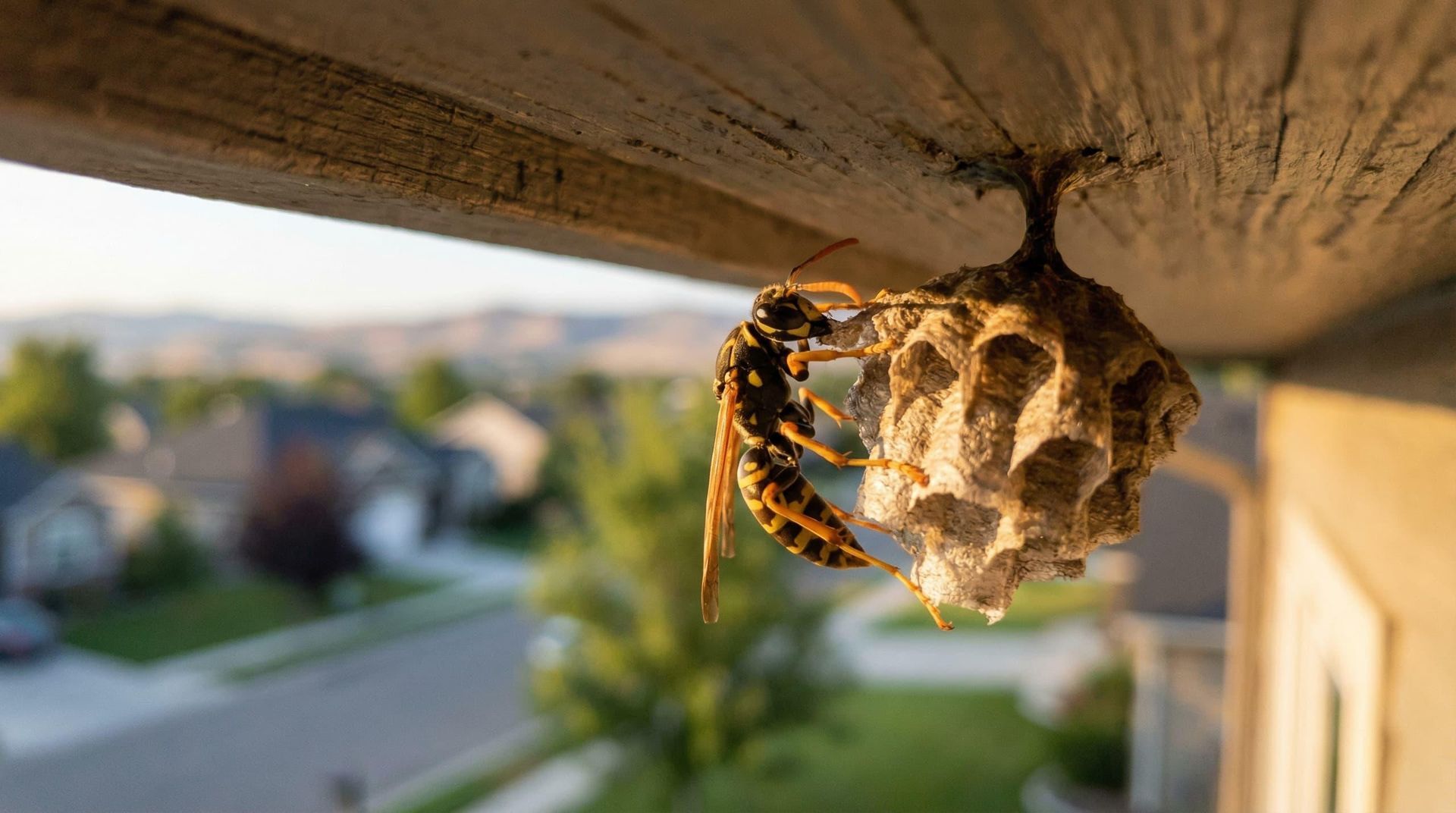
Paper wasps are generally longer and more slender than yellowjackets and have noticeably long legs that hang down while they fly.
Their nests are also easy to recognize. Paper wasps build open, umbrella-shaped paper nests with exposed hexagonal cells.
Common nesting locations include:
- Under eaves
- Porch ceilings
- Decks
- Garage ceilings
- Barns
- Sheds
- Attics
- Overhangs
- Around window and door frames
Paper wasps are particularly important to watch for in spring. In Michigan, overwintered queens begin establishing new nests as temperatures warm, meaning early intervention can prevent a small nest from becoming a much larger colony.
Bald-Faced Hornets
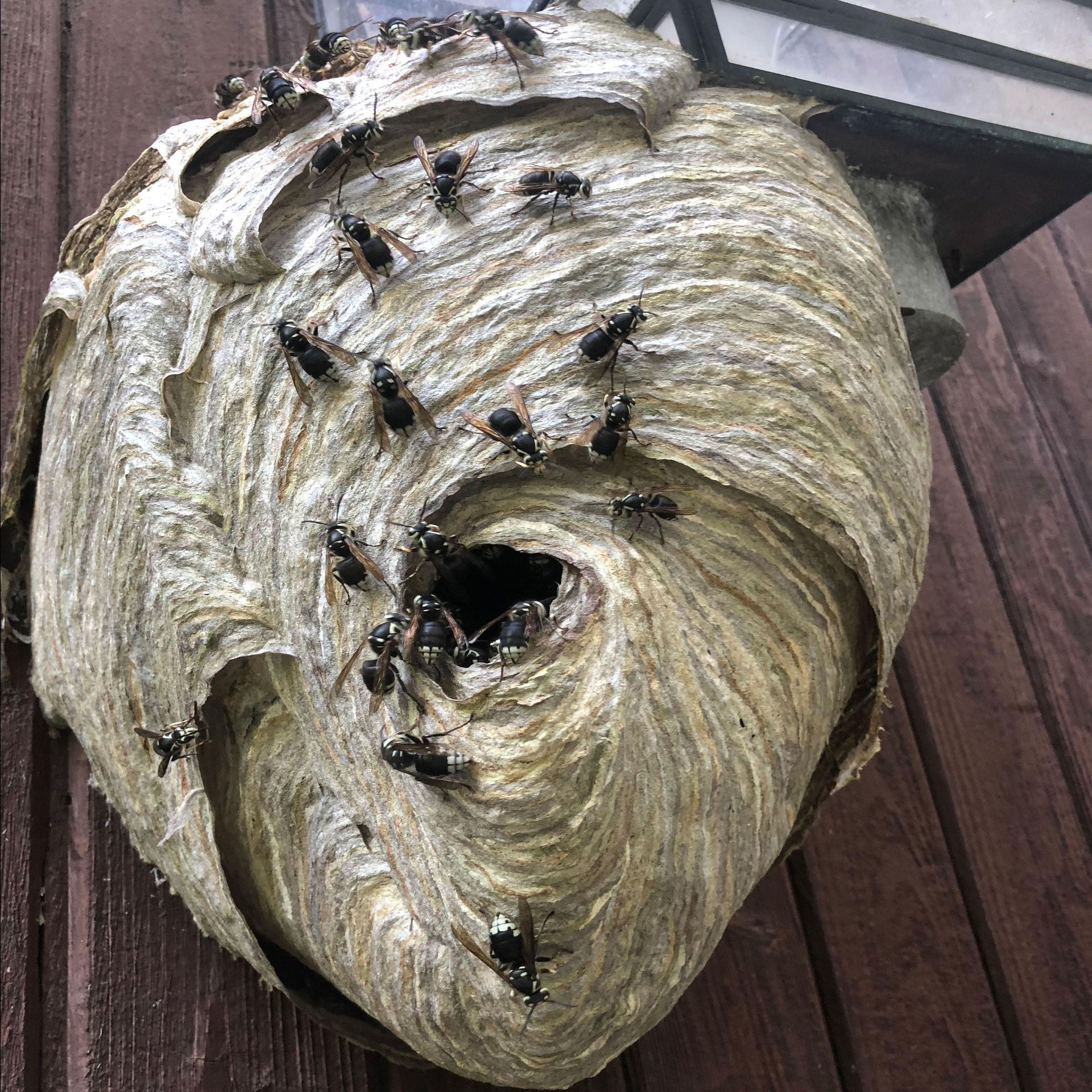
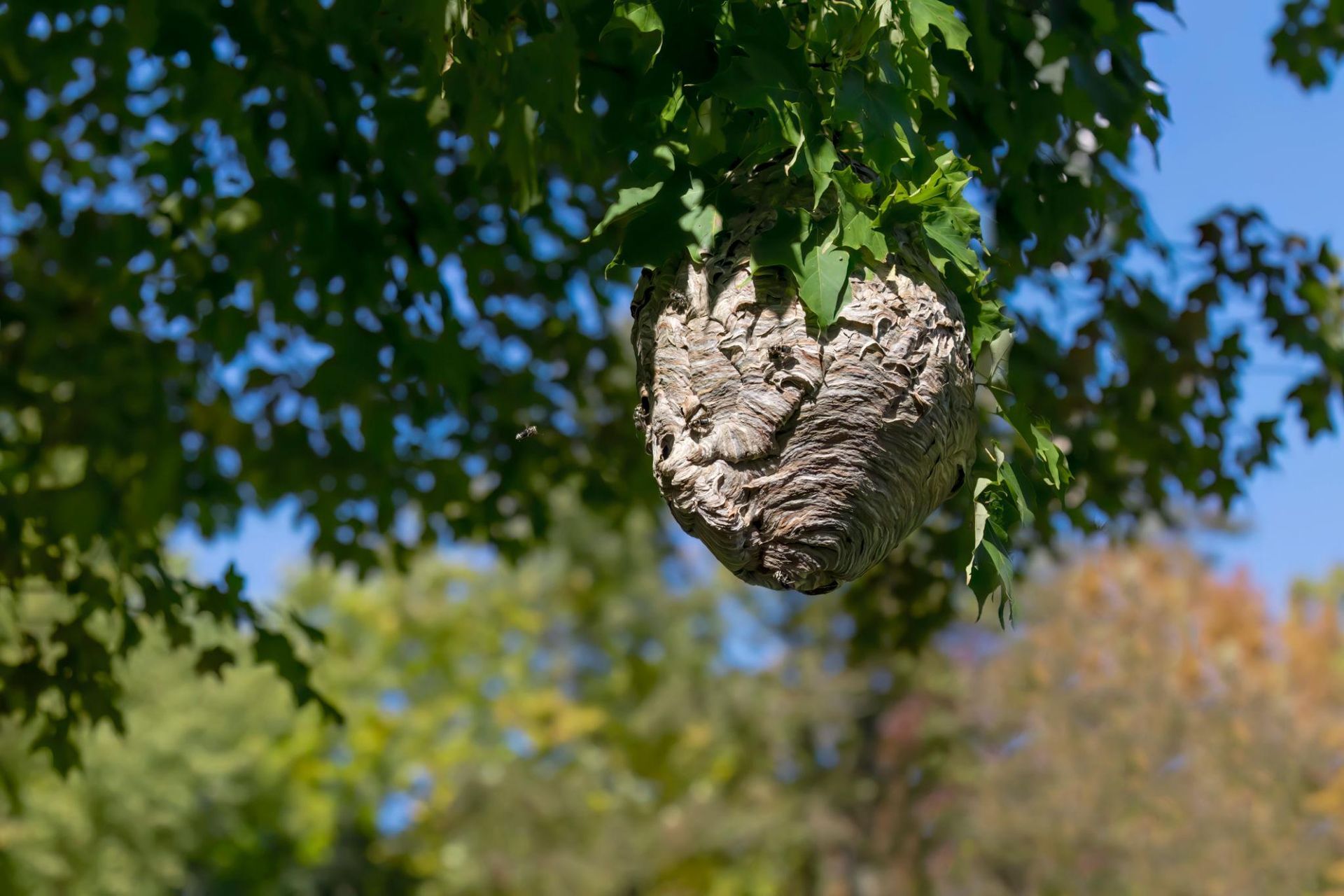
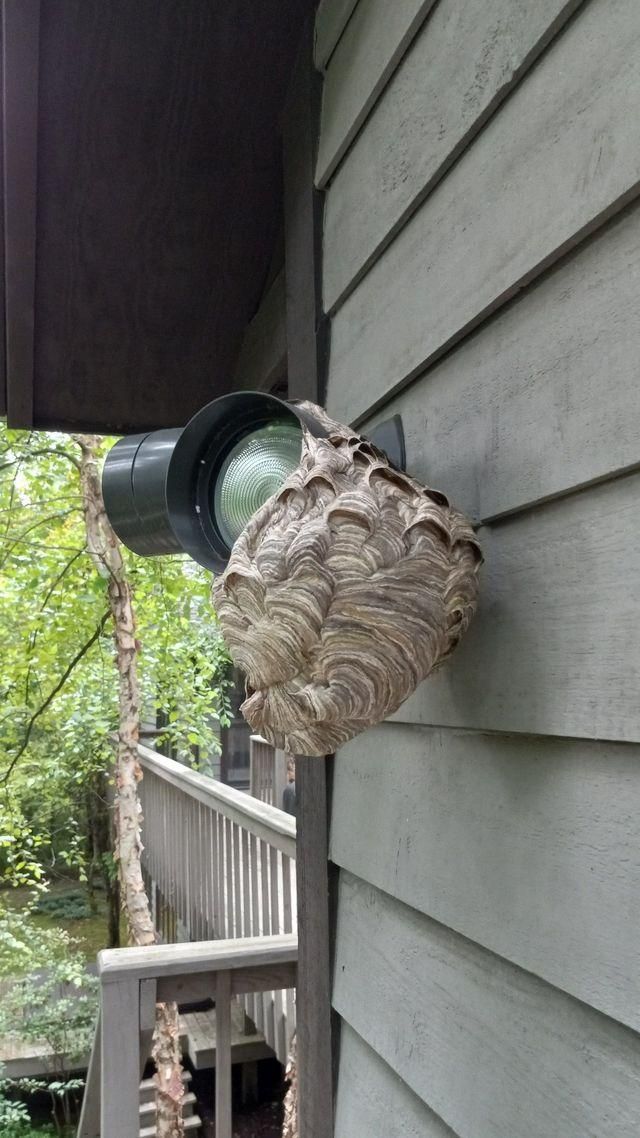
Despite their common name, bald-faced hornets are technically a type of yellowjacket.
They're easy to recognize because of their primarily black bodies and distinctive white or cream-colored markings on the face and abdomen.
Their large, enclosed paper nests are commonly found:
- In trees
- In shrubs
- Under roof overhangs
- Around buildings
- In other elevated locations
Bald-faced hornet colonies can become quite large, and the insects can be defensive when their nest is disturbed.
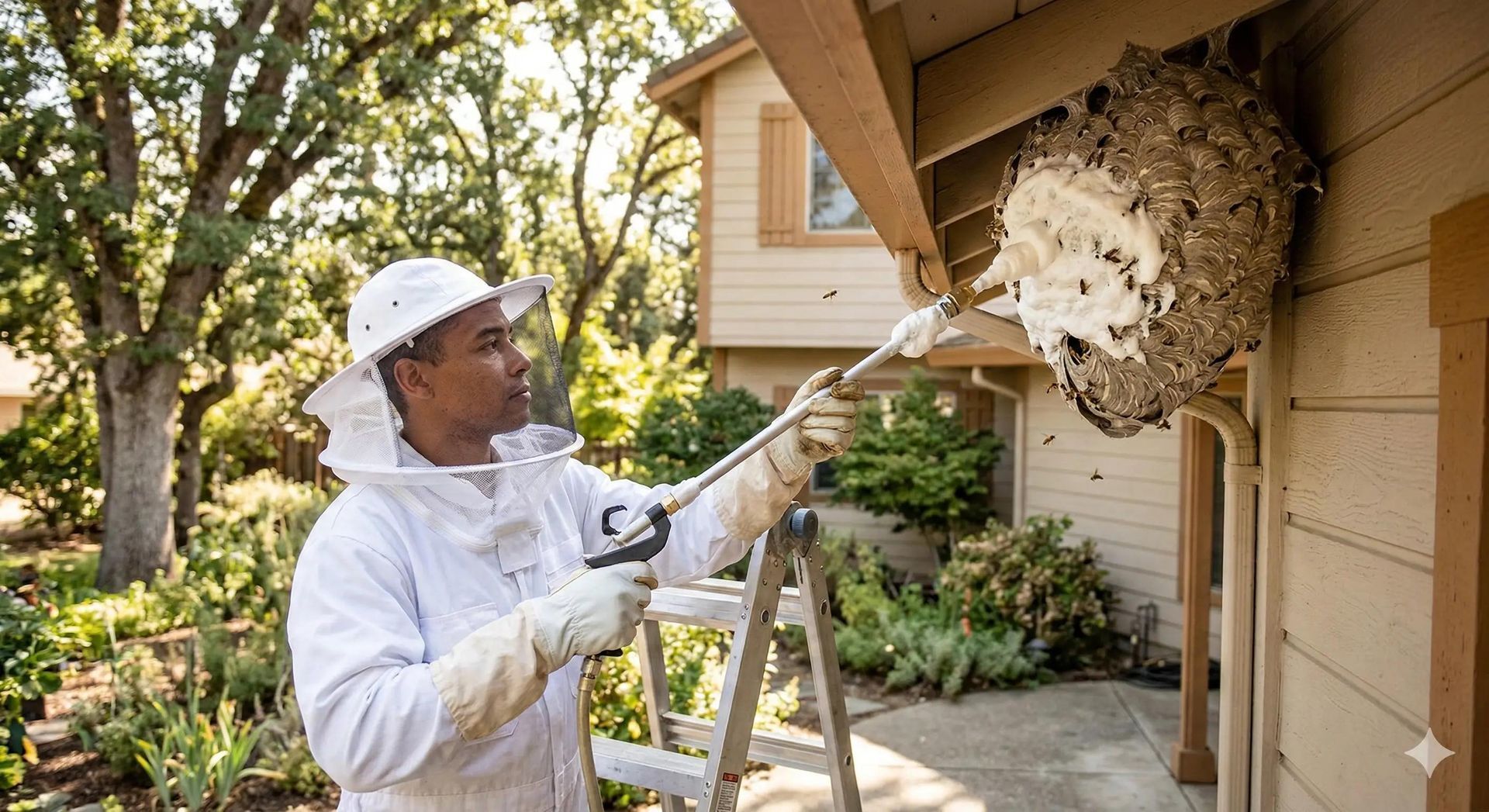
If you have a large bald-faced hornet nest hanging over a walkway, driveway, deck, entrance, or other high-traffic area, professional treatment is often the safest option.
Solitary Wasps
Not every large wasp flying around your yard means you have a dangerous colony.
Many solitary wasps, including certain digger and mud-dauber species, live very differently from yellowjackets and paper wasps. They generally do not defend a large communal nest and are much less likely to sting people unless physically handled.
Some solitary wasps can actually be beneficial because they prey on insects and spiders.
The important distinction is whether you're seeing individual wasps or a large number of wasps repeatedly entering and exiting a shared nest.
10 Ways to Prevent Wasps From Nesting on Your Property
1. Seal Cracks and Openings Around Your Home
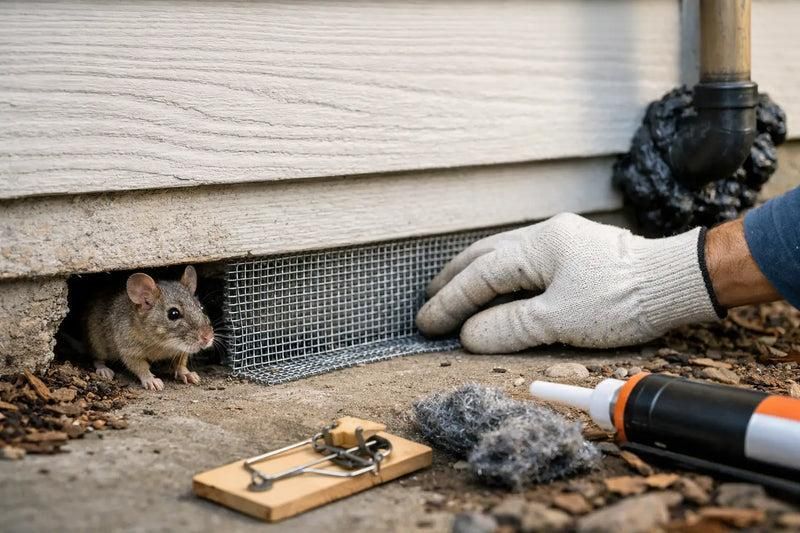
One of the best ways to reduce the chance of wasps establishing nests inside your home is to eliminate easy access points.
Inspect and seal gaps around:
- Windows
- Doors
- Siding
- Utility penetrations
- Vents
- Attic openings
- Soffits
- Fascia
- Foundation cracks
- Wall penetrations
Some wasps, particularly yellowjackets and paper wasps, can take advantage of protected cavities in buildings.
2. Install and Maintain Proper Screens
Check screens on:
- Attic vents
- Gable vents
- Soffit vents
- Windows
- Doors
- Crawl-space openings
A damaged screen can provide an easy entry point for insects looking for a protected nesting location.
3. Remove Old Wasp Nests
If you find an abandoned wasp nest during the colder months, removing it can help eliminate a convenient attachment point.
Most yellowjacket and bald-faced hornet colonies are annual and do not reuse the old colony the following year. However, removing old nests and scraping away their attachment point can still be useful as part of overall pest prevention.
Important: Never assume a nest is abandoned simply because you don't see wasps flying around it. Make sure it is inactive before attempting removal.
4. Keep Food and Garbage Covered
Yellowjackets become especially noticeable later in the summer because some species become aggressive scavengers.
Outdoor garbage cans, spilled soda, uncovered food, pet food, and fallen fruit can all provide attractive food sources.
To reduce attraction:
- Keep garbage containers tightly closed.
- Clean up spills quickly.
- Don't leave pet food outside.
- Pick up fallen fruit.
- Cover food during outdoor gatherings.
- Keep sugary drinks covered when not drinking.
Removing food sources won't necessarily eliminate an established nest, but it can reduce unnecessary wasp activity around areas where people spend time.
5. Pick Up Fallen Fruit
If you have apple, pear, plum, or other fruit trees, inspect the ground regularly.
Overripe and fallen fruit can attract yellowjackets and other insects. Removing fallen fruit can help reduce the amount of food available to scavenging wasps.
6. Manage Landscaping Around Your Home
Wasps often take advantage of protected areas around landscaping.
Keep an eye on:
- Landscape timbers
- Wood piles
- Dense shrubs
- Hollow logs
- Rock piles
- Decorative structures
- Overgrown vegetation
Keeping landscaping maintained and reducing unnecessary harborage areas can make your property less attractive to nesting insects.
7. Inspect Your Home in Spring
Spring is one of the best times to look for the beginning stages of a wasp problem.
A colony that starts with a single queen is much easier to address than a mature colony containing hundreds or thousands of workers.
Check around:
- Eaves
- Porch ceilings
- Decks
- Sheds
- Garages
- Attics
- Window frames
- Siding
- Outdoor structures
Early detection can make a major difference.
8. Consider Preventative Exterior Pest Treatments
A professional exterior pest treatment can help reduce pest pressure around the perimeter of your property.
Depending on the pest control program and products being used, treatments may target common areas where insects travel, rest, or attempt to establish themselves.
For properties that experience recurring wasp problems every summer, preventative service can be especially useful.
9. Don't Disturb an Active Nest
This is one of the most important rules of wasp control.
If you discover an active nest, don't poke it, knock it down, spray it from a few feet away, or attempt to block the entrance while wasps are still active.
Social wasps can become highly defensive when their nest is threatened. Yellowjackets, in particular, can sting repeatedly.
If the nest is near a doorway, play area, deck, driveway, business entrance, or another location where people regularly walk, keeping your distance and contacting a pest management professional is the safest approach.
10. Have Recurring Wasp Problems Professionally Evaluated
If wasps return to the same area every year, there's a good chance your property has conditions that consistently make it attractive to them.
A professional inspection can help identify:
- Potential nesting locations
- Structural entry points
- Harborage areas
- Food sources
- Moisture issues
- Landscaping conditions
- Existing nests
Addressing the reason wasps keep returning can be more effective than simply treating the individual nest every year.
Why Do Wasps Keep Coming Back to the Same Property
If you've treated wasps before and they're back again this year, that doesn't necessarily mean the previous treatment failed.
Wasp colonies are seasonal. New queens can establish new colonies when conditions are favorable, meaning a property that was treated last year can still have wasps the following summer.
In Michigan, queens begin searching for protected nesting locations in spring. As the colony develops, workers begin expanding the nest and gathering food for developing larvae. By late summer, colonies can be dramatically larger than they were earlier in the season.
This is why early-season prevention and inspection can be so valuable.
Are Wasps Beneficial?
Yes.
Wasps are predators of many insects and can help naturally control caterpillars, flies, crickets, and other pests. Some solitary wasps also prey on specific insects and spiders.
That doesn't mean every nest needs to be eliminated.
A nest located far away from people and pets may not require treatment.
However, a nest located next to your front door, children's play area, patio, business entrance, or other high-traffic location creates a much greater risk of accidental encounters.
The goal of professional pest management isn't necessarily to eliminate every wasp from your property. It's to manage wasp activity where it creates a nuisance or safety concern.
When Should You Call a Pest Control Professional?
Consider professional wasp control if:
- You're seeing large numbers of wasps.
- Wasps are entering a wall, attic, or other enclosed space.
- You can't locate the nest.
- The nest is high in a tree.
- The nest is near a doorway.
- Wasps are nesting around a business entrance.
- You're finding nests repeatedly each year.
- Someone on the property has a serious sting allergy.
- You don't feel comfortable treating the nest yourself.
Hidden nests can be particularly challenging because treating only the visible insects may not eliminate the colony.
A professional can identify where the wasps are coming from and determine the appropriate treatment strategy based on the species, nest location, and level of activity.
Professional Wasp Control for Michigan Homes and Businesses
Wasps are a normal part of Michigan's ecosystem, but you shouldn't have to worry about getting stung every time you walk onto your porch or enter your business.
Anteater Pest Control provides professional wasp, yellowjacket, hornet, and stinging insect control for homeowners and businesses throughout our Michigan service areas. Our technicians can identify the type of stinging insect you're dealing with, locate the source of activity, and recommend an appropriate treatment plan.
Whether you've discovered a paper wasp nest under your eaves, yellowjackets entering a wall void, or a large bald-faced hornet nest hanging from a tree, don't put yourself at unnecessary risk trying to handle an active nest.
Contact Anteater Pest Control today to schedule professional wasp control and get your property back to enjoying the outdoors without unwanted stinging insects.
Frequently Asked Questions About Wasp Prevention
What attracts wasps to my property?
Wasps may be attracted to food, sugary substances, fallen fruit, insects, water, shelter, and protected areas suitable for nesting.
What time of year should I prevent wasps?
Spring is an excellent time to begin inspecting for new nests because colonies are still developing. Addressing potential nesting locations early can be easier than dealing with a mature colony later in the summer.
Do wasps come back to the same nest every year?
Most yellowjacket and bald-faced hornet colonies are annual and do not reuse the old nest the following year. New queens establish new colonies in spring.
How do I know if I have yellowjackets or paper wasps?
Yellowjackets are generally compact, smooth-bodied insects with black-and-yellow markings. Paper wasps are more slender, have long dangling legs, and typically build exposed umbrella-shaped nests.
Are bald-faced hornets dangerous?
Bald-faced hornets can be defensive when their nest is disturbed. Their large enclosed nests are often located in trees, shrubs, and elevated areas around structures.
Should I remove a wasp nest myself?
If you are dealing with an active nest, especially one located near people or inside a structure, professional treatment is often the safer choice. Never attempt to treat a nest if you have a known severe allergy to insect stings.